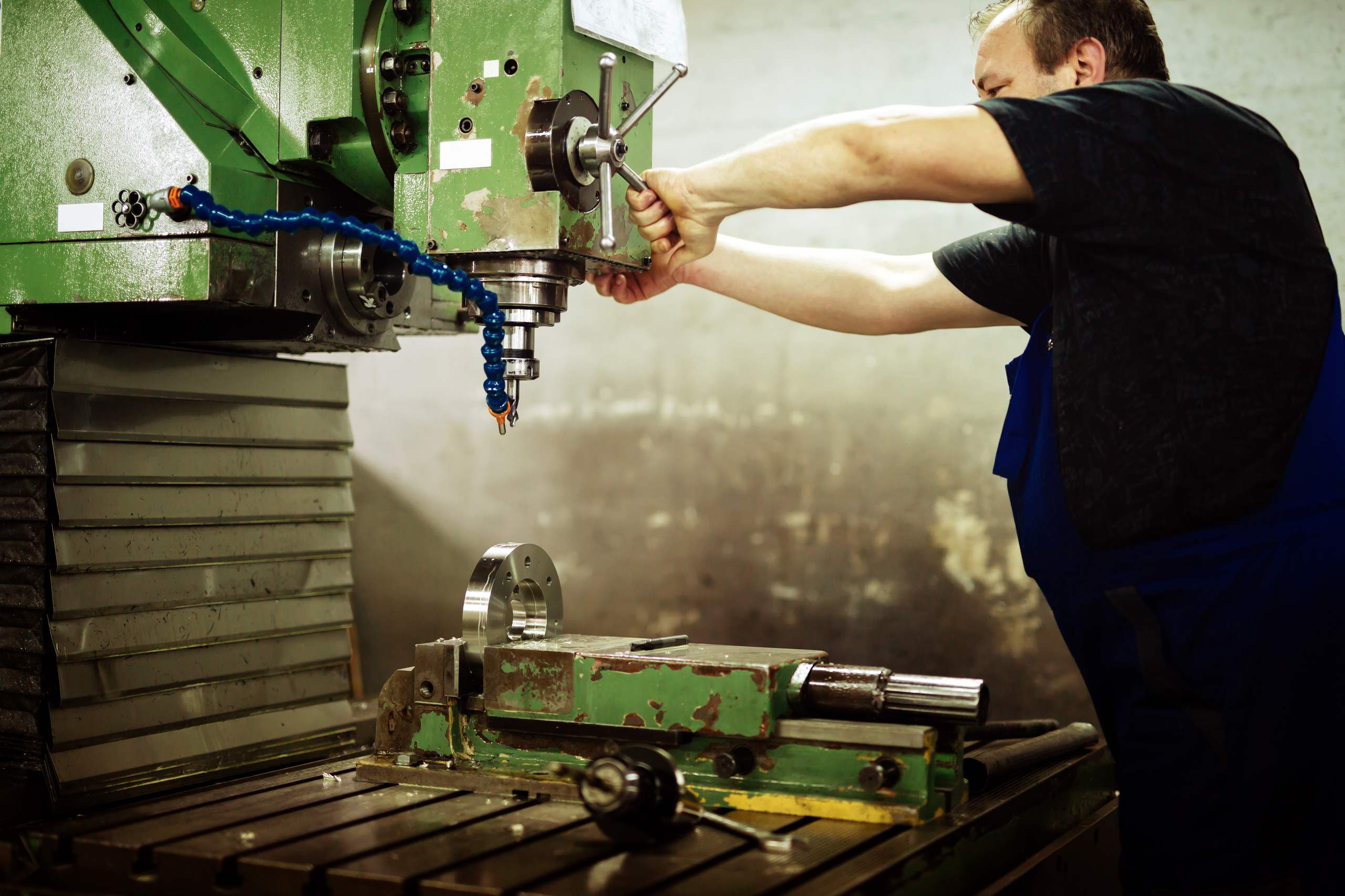
One of the key features of machine tools today is precision. Machine tools can manufacture parts ranging from tiny mechanical pieces to large industrial parts, and they are expected to be capable of maintaining accurate dimensions.
So what affects the accuracy of a machine tool?
There are many factors at play, including machine structure design, machine components, control system, environment, etc. A machine may have a good control system, but if the machine structure is weak or the guideways are misaligned, the machining accuracy will not be very good.
Rigid structures can help prevent the machine from moving while it is cutting. In some cases, a machine can experience vibrations or slight deformations during the cutting process, especially when machining hard materials or using aggressive cutting parameters.
Therefore, machine manufacturers focus on things like the machine’s structural rigidity, guideway design, spindle support, component alignment, vibration isolation, etc., in order to create a stable structure.
A stable structure is important because it forms the basis of a high-accuracy machine tool.
A machine tool needs to be able to move in a precise, controlled manner. Therefore, a machine tool’s components need to move in a path with as little play as possible. This includes guideways, bearings, ball screws, linear motors, etc. Any amount of backlash or friction will result in errors in the movement of the machine.
Modern machine tools have high-precision components and feedback systems that can detect and correct positioning errors.
Another factor that affects machine tool accuracy is temperature. Machine tool components can expand and contract as their temperature changes. This can be due to the spindle, motors, cutting process, etc., and even the slightest change in temperature can result in changes to the dimensions and positioning of components.
Many modern machine tools have built-in temperature monitoring and can automatically adjust their operations, or can be cooled to reduce temperature fluctuations.
It is important to note that accuracy and repeatability are related but not the same. Accuracy refers to how accurately a machine tool can achieve its desired position or dimension. Repeatability refers to how accurately a machine tool can return to its original position. A machine tool can have good repeatability but still be inaccurate.
Modern machine tools use sensors to measure various things, such as the position of the machine, temperature, speed, etc. These measurements are then used to create a feedback loop. The machine can compare the actual position to the desired position and make adjustments accordingly. This allows the machine to be more aware of its surroundings and to adapt accordingly.
Finally, it is important to maintain a machine tool properly. A machine tool can be accurate initially, but over time, it will become less accurate due to wear and tear, contamination, tool wear, misalignment, etc. Regular maintenance and inspection can help prevent this. Manufacturers need to constantly monitor the machine to ensure that it remains accurate.
As machine tools become more sophisticated, the importance of machine tool accuracy will only grow. As machine tools become more automated and integrated with other technologies, the role of machine tool accuracy in ensuring quality products will continue to increase. In the future, machine tool accuracy will be determined by the integration of all aspects of a machine tool, from the mechanical components to the software that controls it.
Therefore, future machine tool technology will not only be about making machines more accurate, but also about making them more robust, measurable, self-adaptive, and intelligent.
In summary, the accuracy of a machine tool depends on a number of different factors. These include the machine’s structural stability, the accuracy of the components, the control system, and the measurement and feedback system. All of these factors come together to determine the final accuracy of the machine tool. For anyone who is involved with machine tools and manufacturing, it is important to understand how all of these factors interact in order to produce the best possible results.